“`html
Miami Woman Accused of Dragging Victim with Car Following Argument 🚗😳
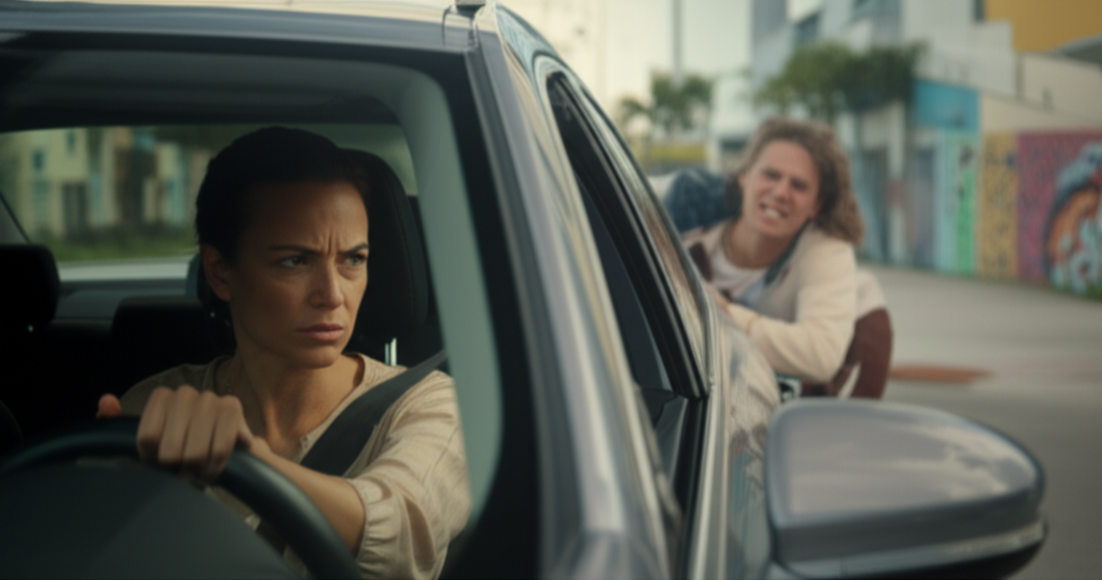
In a scene that could easily be mistaken for a low-budget thriller, a recent incident in Miami has captured headlines and our collective disbelief. A woman has been accused of dragging a victim for several yards with her car following a heated argument, a graphic example of how unresolved disputes can sometimes escalate into unimaginable violence. The juxtaposition of an everyday disagreement against such a shocking response raises the question: how do we go from words to wielding a vehicle as a weapon? 🤔
This altercation unfolded in a typical neighborhood, where confrontations are typically resolved with a stern word or two. Yet, in an astonishing turn—much like David’s unlikely victory against Goliath—the smaller conflict morphed into an instance of vehicular assault, leading to serious legal repercussions for the accused. Ironically, while society often leans on the notion of civil discourse, incidents like these reveal the razor-thin line between reason and rage. ⚖️
A Collision of Words and Actions
On the surface, this incident echoes the frustrations faced in countless relationships: people clash, tempers flare, and before you know it, words give way to actions. Yet, this was not an argument resulting in a simple “I’m sorry” and a cup of coffee. Eyewitness accounts describe a scene where emotions boiled over, turning what may have once seemed like a trivial dispute into a life-threatening scenario. As surreal as it sounds, this moment epitomizes the antithesis of community dynamics—where safety is expected, yet chaos reigns.
The accused’s impending legal battle poses intriguing questions about accountability, societal norms, and the ramifications of public conflict. For all the optimism society can tout about conflict resolution skills, this particular event starkly contrasts the ideal. How did we arrive at a point where physicality became the final word? ❓
Understanding the Psychological Eruption
When emotions take the wheel, reason often takes the backseat. Experts in conflict resolution note that anger can ignite the brain’s fight-or-flight response—a primal instinct as old as humanity itself. Although it seems extraordinary that someone could reach such extremes, the underlying motivations can be surprisingly relatable. Everyday stresses—from economic uncertainty to personal crises—could serve as the fuel for explosive outbursts.
After all, isn’t it easier to imagine oneself simply reading a text only to explode upon a perceived slight than structuring a calm discussion? Our lives are often like rubber bands stretched thin, ready to snap at any moment. The currents of resentment and frustration flow through these interactions, and for our Miami protagonist, a moment of anger transformed a car into an unexpected weapon of choices made in haste. 💔
The Ripple Effect of Violence
Ultimately, this case serves as a microcosm of societal struggles with anger management and conflict resolution. For the victim, the harrowing aftermath of the event could lead to physical injuries and lasting emotional trauma. Meanwhile, the woman driving the car now faces serious legal implications, placing her future at risk. This powerful antithesis—between one choice in a pivotal moment and the subsequent life-altering consequences—is not just striking but a cautionary tale reflecting modern dilemmas. ⚡
Reflections on Conflict and Community
Can we truly foster safer communities, or will the specter of violence continue to lurk beneath the surface of escalating emotions? As this incident resonates within Miami, it is a clarion call for all of us to reflect on our responsibilities as communicators and conflict resolvers. We must ask ourselves whether our emotional responses are driving our decisions or if, perhaps, we can aspire to lead with empathy instead. 🤝
What if we employed tools of understanding rather than weapons of despair? Would the woman accused of dragging her victim have seen an alternative path toward resolution—a conversation, a moment of pause? In this tale of ordinary people caught in extraordinary circumstance, we find a poignant reminder that the lines we travel are as fragile as the choices that define them.
“`